Pick-pack-pass
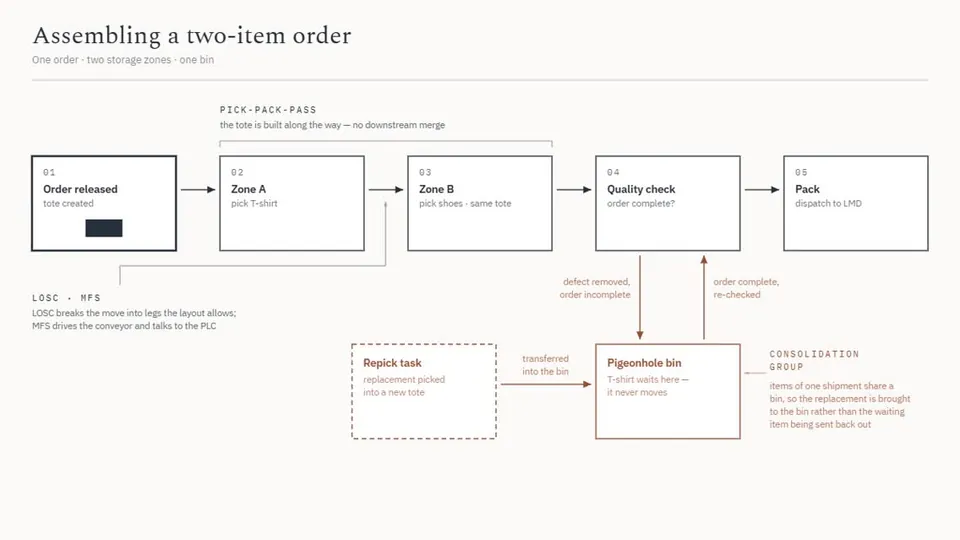
In a pick-pack-pass flow, the tote is not assembled at the end. It is built along the way. The handling unit (HU) travels to the next pick location, and the person working that zone adds their item to the tote already in front of them. Then it moves on again.
There is no merge step downstream, because the order was never split into parts that needed joining back together.
LOSC and MFS: two different jobs
These two are often spoken about as one thing. They do different jobs.
- LOSC
- Layout-oriented storage control solves the layout problem. An HU cannot jump from source to destination, so LOSC breaks the movement into intermediate steps that follow how the building is actually connected.
- MFS
- The Material Flow System handles execution. It talks to the conveyor and its PLC, tells the equipment where the HU goes next and confirms when it arrives.
In short: LOSC decides the path. MFS drives it.
Consolidation groups and the repick
This is what makes the exception case work. Items in the same shipment share a consolidation group, and that group decides where they are placed. That is why the first pick and every pick after it land in the same bin, not wherever happens to be free.
So when a defect is found, the order is not cancelled or restarted. A repick task is raised. The replacement is picked into a new tote and transferred into the bin where the first pick is already waiting. The T-shirt never moves. The system already knew where the rest of that order belonged.
The real design work
Most of the design effort in a flow like this goes into the exceptions. The happy path is the easy part.